Showing posts with label bitcoin. Show all posts

Bitcoin Explained for beginners.

Bitcoin, Explained for Beginners

A shady form of payment, a speculative bubble or the future of finance? Here’s how to make sense of the news around Bitcoin.

The value of Bitcoin broke all records in March 2021.


The spot price to buy a bitcoin — the world’s first and most popular digital currency — briefly rose above $60,000 on March 13, 2021. (For context, the cryptocurrency's all-time low is from 2013, when it was priced at $67.81.) With such a meteoric rise, many are wondering: What, exactly, is Bitcoin, and where does it get its value? Years from now, will we talk about the Bitcoin boom and bust periods as we do about the Gold Rush? Or, will it become a staple in a diversified investment portfolio and a common way to buy a pizza?


For the most part, the jury’s still out. But the past 10 years have given us a better indication of the role Bitcoin might play in the portfolios of retail investors and large institutions alike.


Definition: What is Bitcoin?

Bitcoin was launched in 2009 and is regarded as the first cryptocurrency. It’s a decentralized form of digital cash that eliminates the need for traditional intermediaries like banks and governments to make financial transactions. Still feeling a little confused? Don’t worry, that’s normal.


Fiat money (like the U.S. dollars in your bank account) is backed and regulated by the government that issues it. Bitcoin, on the other hand, is powered through a combination of peer-to-peer technology — a network of individuals, much like the volunteer editors who create Wikipedia — and software-driven cryptography, the science of passing secret information that can only be read by the sender and receiver. This creates a currency backed by code rather than items of physical value, like gold or silver, or by trust in central authorities like the U.S. dollar or Japanese yen.


“What is needed is an electronic payment system based on cryptographic proof instead of trust, allowing any two willing parties to transact directly with each other without the need for a trusted third party,” wrote Satoshi Nakamoto — the pseudonym of the mysterious Bitcoin creator, who remains unknown — in a white paper introducing the open-source technology. It’s come a long way since then, now accepted as payment by AT&T, the Dallas Mavericks and Wikipedia, among others.

How does Bitcoin work?

Each bitcoin (trading symbol “BTC,” though “XBT” is also used) is a computer file stored in a digital wallet on a computer or smartphone. To understand how the cryptocurrency works, it helps to understand these terms and a little context:


Blockchain: Bitcoin is powered by open-source code known as blockchain, which creates a shared public ledger. Each transaction is a “block” that is “chained” to the code, creating a permanent record of each transaction. Blockchain technology is at the heart of more than 6,000 cryptocurrencies that have followed in Bitcoin’s wake.


Private and public keys: A bitcoin wallet contains a public key and a private key, which work together to allow the owner to initiate and digitally sign transactions, providing proof of authorization.


Bitcoin miners: Miners — or members of the peer-to-peer platform — then independently confirm the transaction using high-speed computers, typically within 10 to 20 minutes. Miners are paid in bitcoin for their efforts.


How does Bitcoin make money?

Bitcoin value follows the law of supply and demand — and because demand waxes and wanes, there’s a lot of volatility in the cryptocurrency’s price.


Besides mining bitcoin, which requires technical expertise and an investment in high-performance computers, most people purchase bitcoins as a form of currency speculation — betting that the U.S. dollar value of one bitcoin will be higher in the future than it is today. But that's difficult to predict.


Storing your bitcoins: Hot wallets vs. cold wallets

Bitcoins can be stored in two kinds of digital wallets:


Hot wallet: Digital currency is stored in the cloud on a trusted exchange or provider, and accessed through a computer browser, desktop or smartphone app.


Cold wallet: An encrypted portable device much like a thumb drive that allows you to download and carry your bitcoins.


Basically, a hot wallet is connected to the internet; a cold wallet is not. But you need a hot wallet to download bitcoins into a portable cold wallet.


Buying Bitcoin: The pros and cons

With a speculative asset class like bitcoin, it’s better to start with why you should be wary:


Bitcoin: The cons

Price volatility. The 2017 spike in Bitcoin’s price was driven by speculators rushing into the bitcoin market, as NerdWallet staff writers discussed at the time. The recent gains are good news if you bought Bitcoin in December 2018; those who bought in 2017 when Bitcoin’s price was racing toward $20,000 had to wait until December 2020 to recover their losses.


Hacking concerns. While backers say the blockchain technology behind bitcoin is even more secure than traditional electronic money transfers, bitcoin hot wallets have been an attractive target for hackers. There have been a number of high-profile hacks, such as the news in May 2019 that more than $40 million in bitcoin was stolen from several high-net-worth accounts on cryptocurrency exchange Binance (the company covered the losses).


Limited (but growing) use. In May 2019, telecommunications giant AT&T joined companies such as Overstock.com, Microsoft and Dish Network in accepting bitcoin payments. But these companies are the exception, not the rule.


Not protected by SIPC. The Securities Investor Protection Corporation insures investors up to $500,000 if a brokerage fails or funds are stolen, but that insurance doesn’t cover cryptocurrency.


Bitcoin: The pros

Private, secure transactions anytime — with fewer potential fees. Once you own bitcoins, you can transfer them anytime, anywhere, reducing the time and potential expense of any transaction. Transactions don’t contain personal information like a name or credit card number, which eliminates the risk of consumer information being stolen for fraudulent purchases or identity theft. (Keep in mind, though, that to purchase bitcoins on an exchange, generally you'll first need to link your bank account.)


The potential for big growth. Some investors who buy and hold the currency are betting that once Bitcoin matures, greater trust and more widespread use will follow, and therefore Bitcoin’s value will grow.


The ability to avoid traditional banks or government intermediaries. After the financial crisis and the Great Recession, some investors are eager to embrace an alternative, decentralized currency — one that is essentially outside the control of regular banks, governing authorities or other third parties. (However, to buy Bitcoin on an exchange with U.S. dollars, you'll likely need to link your bank account.)


Where can I buy Bitcoin?

There are four ways to get bitcoins:


Cryptocurrency exchanges. There are a number of exchanges in the U.S. and abroad. Coinbase is the largest cryptocurrency exchange in the U.S., trading more than 30 cryptocurrencies.


Investment brokerages. Robinhood was the first mainstream investment broker to offer Bitcoin and other cryptocurrencies (Robinhood Crypto is available in most, but not all, U.S. states). Tradestation, eToro and Sofi Active Investing also offering cryptocurrency trading in most U.S. states.


Bitcoin ATMs. There are more than 7,000 bitcoin ATMs in the U.S. (search Coin ATM Radar to find one near you).


Peer-to-peer purchases. True to its original spirit, you can buy bitcoins directly from other bitcoin owners through peer-to-peer tools like Bisq, Bitquick and LocalBitcoins.com.


Bitcoin mining. You can earn bitcoins through mining, but the technical expertise required and computer cost puts this option out of reach for most.
Share:

Bitcoin Cash: What You Need to Know

Image result for bitcoin cash
BITCOIN CASH’s sudden announcement on Saturday that they’ll go ahead with a fork on August 1 caught a lot of people, including myself, by surprise. In this article, I’m going to explain what Bitcoin Cash (aka BCC) is, how it affects you and how you should prepare for August 1.
What is Bitcoin Cash?
  • Here is the project announcement on Bitcointalk.
  • Here is the project website.
From the project website’s FAQ:
What is Bitcoin Cash?
Bitcoin Cash is peer-to-peer electronic cash for the Internet. It is fully decentralized, with no central bank and requires no trusted third parties to operate.
The prominent use of “peer to peer electronic cash” is purposeful here. Bitcoin Cash is seeking to be a cryptocurrency that’s focused on transaction capacity.

Why is this fork a surprise?

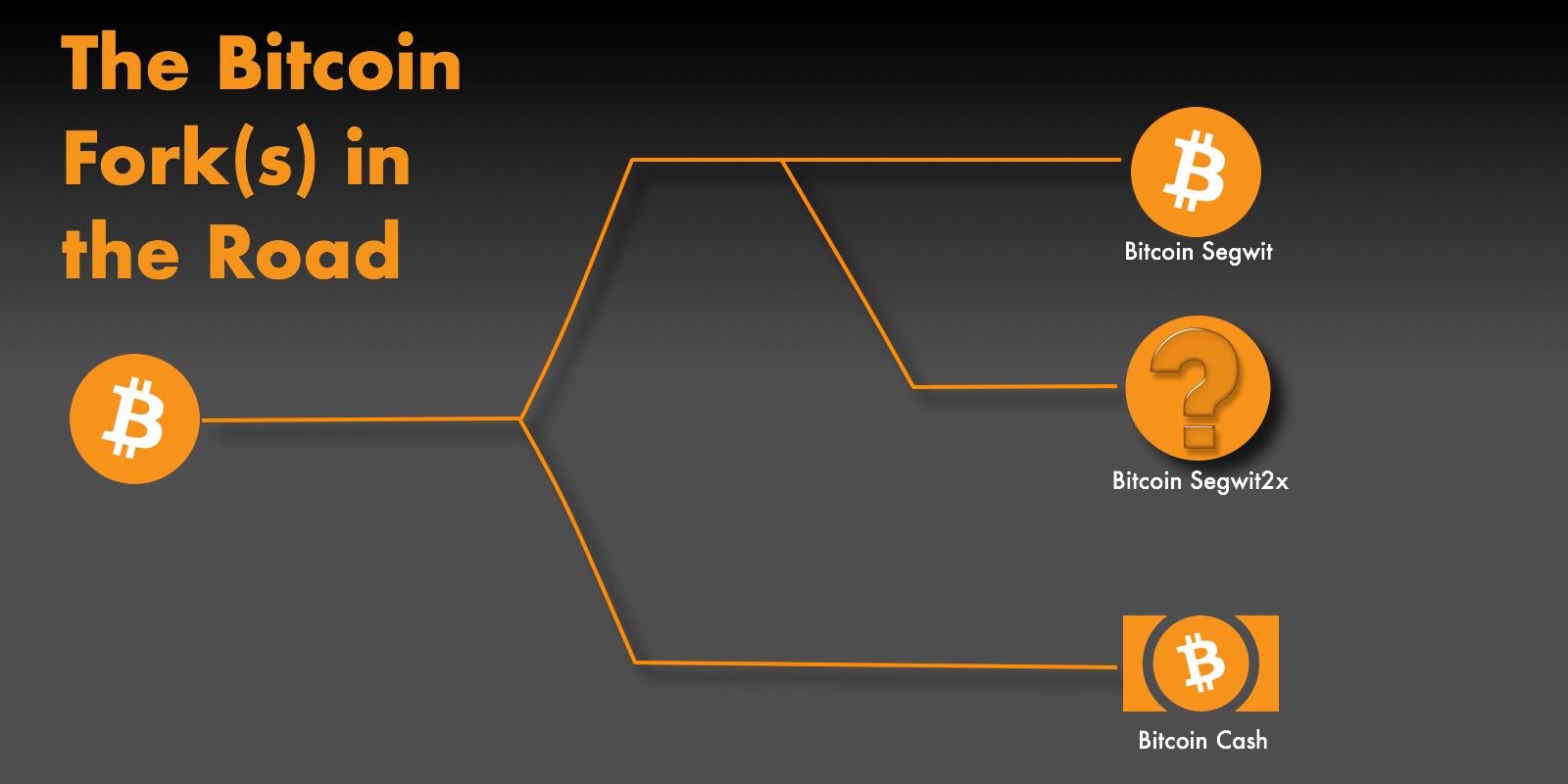
Many people (including myself) thought that this fork would trigger if BIP148 were able to split the network. In other words, many people thought Bitcoin Cash (and its client Bitcoin ABC) was just a credible threat to prevent a contentious user-activated soft fork (UASF). Bitmain actually starts that the Segwit2x (aka New York Agreement) would be preferable:
So naturally, when BIP91 (first part of Segwit2x) locked-in and activated ahead of BIP148, which is scheduled for August 1, most assumed this would prevent the so-called user-activated hard fork (UAHF) from triggering.
But, it looks like Bitcoin Cash supporters had other ideas.

Why should I care?

You should care because Bitcoin Cash is a permanent fork of Bitcoin.
Again, from the FAQ:
Is Bitcoin Cash different from ‘Bitcoin’?
Yes. Bitcoin Cash is the continuation of the Bitcoin project as peer-to-peer digital cash. It is a fork of the Bitcoin blockchain ledger, with upgraded consensus rules that allow it to grow and scale.
This means that if you own Bitcoin (that is, you control your own private keys) prior to the fork on 2017 August 1 12:20 UTC, you will have the same amount of Bitcoin and Bitcoin Cash after the fork.
Lest you think these BCC isn’t worth anything, BCC futures are currently trading at about $475 on ViaBTC.

What do I need to know?

First, you should know that many exchanges, including Coinbase, are simply not prepared for this event.
Again, from the FAQ:
If I own Bitcoin, do I automatically own Bitcoin Cash too?
Yes. Because Bitcoin Cash is a fork of the ledger, that means you own the same amount of Bitcoin Cash as you did Bitcoin at the time of the forking block. However, if your Bitcoins are stored by a third party such as an exchange, then you must inquire with them about your cash.
Note that last sentence. Exchanges or third-party bitcoin storage providers may or may not give you your Bitcoin Cash. It’s likely that third party services will try to do the right thing, but there’s no way to know if they can get everything set up in time to be able to give you the Bitcoin Cash you’re entitled to.
Second, all hard forks present two risks: replay and wipeout attacks. Wipeout is not a as much risk since this is a permanent fork (there are scenarios where one chain’s miners may attack the other, but this isn’t in play yet). Replay protection is provided as part of the Bitcoin Cash release as explained in the FAQ:
How is transaction replay being handled between the new and the old blockchain?
Bitcoin Cash transactions use a new flag SIGHASH_FORKID, which is non standard to the legacy blockchain. This prevents Bitcoin Cash transactions from being replayed on the Bitcoin blockchain and vice versa.
Rest assured that as long as you control your own private keys, you should be able to use those keys to create transactions on either chain safely.

I thought Bitcoin solved scaling! Why is this happening?

Good question. After the scaling drama of the past few years, we finally made progress when BIP91 locked in on Thursday. Though Segwit increases transaction capacity, it’s not done so in a way that everyone is happy with.
BCC looks like an appeal to the segment of the Bitcoin users that don’t like Segwit. Since Segwit is getting activated on Bitcoin, this fork gives many of these people a place to go.
From the FAQ:
Why was a fork necessary to create Bitcoin Cash?
The legacy Bitcoin code had a maximum limit of 1MB of data per block, or about 3 transactions per second. Although technically simple to raise this limit, the community could not reach a consensus, even after years of debate.

So what features does Bitcoin Cash have?

Bitcoin Cash offers three new features. First, it offers a much larger block size of 8MB.
Second, it offers replay and wipeout protection. The transaction signature is slightly different and the forking block has to be greater than 1MB.
Third, it offers a way to adjust the proof-of-work difficulty quicker than the normal 2016 block difficulty adjustment interval found in Bitcoin.
From the project announcement on Bitcointalk:
Forking rule:
“REQ-7 Difficulty adjustement in case of hashrate drop
In case the MTP of the tip of the chain is 12h or more after the MTP 6 block before the tip, the proof of work target is increased by a quarter, or 25%, which corresponds to a difficulty reduction of 20% .
RATIONALE: The hashrate supporting the chain is dependent on market price and hard to predict. In order to make sure the chain remains viable no matter what difficulty needs to adjust down in case of abrupt hashrate drop.”
In other words, the difficulty will adjust pretty quickly should there be a low hash rate.

What does this mean for Bitcoin?

This is the hardest thing to answer. It may mean nothing, it may mean a lot. Some obvious things that we’ll now need to think about are:
  • Who will mine Bitcoin Cash?
  • Who will have the larger hash rate? Both coins will use double-sha256 as the proof-of-work.
  • What will the price ratio be?
  • What will the volumes on both coins be like?
  • How will hash rate react to price? How will price react to hash rate?
  • How will this affect the 2x HF part of Segwit2x?
  • What chain will coins that operate on top of Bitcoin like Omni and CounterParty choose?

Conclusion

Unfortunately, the Bitcoin Cash announcement brings more questions than answers. One thing is for certain: if you want to maximize your holdings, it’s in your best interest to get your Bitcoin off third-party services and control your own private keys before August 1st.
Share:

Update on Bitcoin Cash

Image result for bitcoin cash
We wanted to give our customers an update on the recent Bitcoin hard fork. You can read more about what a digital currency fork is here.
Forks enable innovation and improvements to digital currency and we believe that we will see an increasing number of forks in the future. We expect this to be a vibrant and innovative community.
When a digital currency forks, it creates a new digital asset. Adding new digital assets to Coinbase must be approached with caution. Not every asset is immediately safe to add to Coinbase from a technical stability, security, or compliance point of view.
Our top priority is the safety of customer funds and we spend extensive time designing, building, testing and auditing our systems to ensure that the digital assets we support remain safe and secure. We may not always be first in adding an asset, but if we do, you can be sure that we’ve invested significant time and care into supporting it securely. We believe this is the best approach for us to maintain customer trust.
Image result for bitcoin cash
In the case of bitcoin cash, we made clear to our customers that we did not feel we could safely support it on the day it was launched. For customers who wanted immediate access to their bitcoin cash, we advised them to withdraw their bitcoin from the Coinbase platform. However, there are several points we want to make clear for our customers:
  1. Both bitcoin and bitcoin cash remain safely stored on Coinbase.
  2. Customers with balances of bitcoin at the time of the fork now have an equal quantity of bitcoin cash stored by Coinbase.
  3. We operate by the general principle that our customers should benefit to the greatest extent possible from hard forks or other unexpected events.
Over the last several days, we’ve examined all of the relevant issues and have decided to work on adding support for bitcoin cash for Coinbase customers. We made this decision based on factors such as the security of the network, customer demand, trading volumes, and regulatory considerations.
We are planning to have support for bitcoin cash by January 1, 2018, assuming no additional risks emerge during that time.
Once supported, customers will be able to withdraw bitcoin cash. We’ll make a determination at a later date about adding trading support. In the meantime, customer bitcoin cash will remain safely stored on Coinbase.
Share:

What is a Bitcoin fork?

Image result for bitcoin fork
There has been significant news coverage and developments in recent weeks about changes to digital currency networks. These are sometimes called “forks”. We wanted to provide a simple, non-technical explanation to add context to recent discussions (previous blog posts here and here).

What is a “fork”?

A “fork” is a change to the software of the digital currency that creates two separate versions of the blockchain with a shared history.
Forks can be temporary, lasting for a few minutes, or can be a permanent split in the network creating two separate versions of the blockchain. When this happens, two different digital currencies are also created.

Why are changes made to digital currency protocols like Bitcoin and Ethereum?

Coinbase currently supports 3 digital currencies — BitcoinEthereum and Litecoin. Each of these digital currencies use open-source software protocols with independent development teams responsible for changes and improvements to the network, much in the same way that changes to internet protocols allow web browsing to become better over time.
Our mission is to create an open financial system for the world and we believe digital currencies will be fundamental in achieving this mission. However, many of these digital currencies are still in early development. Making improvements to the software — such as the number of transactions the network can support — is crucial to creating finance 2.0.
Image result for bitcoin fork

Why do forks happen?

There are a few reasons why a fork can happen. For example, when a change is proposed to a digital currency protocol, users need to show their support for the new version and upgrade — in a similar way to people regularly update applications on their computer. In order for these changes to get approved many people need to agree, just as changes to cellphone networks require many phone companies to agree.

What does this mean if I have digital currency stored on Coinbase?

Coinbase actively monitors protocol developments and works hard to ensure customer funds are safe in these events. Our policy is to support only one version of a digital currency. In order to determine which fork to support we look at factors such as size of the network, market value and customer demand. We make this decision carefully because safely supporting a new digital currency requires significant work for many teams.
Share:

What is Bitcoin and how does it work? Is it legal? Who's behind it?

What is Money?
It is just an accounting system. It is a way in which we record your assets. In simple words: What do you have? and what you owe on others?
What this money requires: A trusted third party. Somebody who guarantees money is not fake and for that government is doing our jobs for years.
So Money is just an accounting system and so is Bitcoin; Just an accounting system.
So What makes this thing so different? We will decipher that step by step.
Bitcoin is a way of recording transaction; Recording value and it does it digitally so that you and I can transfer it directly and everything is recorded in an open ledger. It monitors and updates the ledger in a collective consensus-based system.
You get away with the need for somebody in the middle having that sort of repository of all the information. So you get away with the fees, inefficiencies, and potential for corruption and risk, that comes with centralizing the information in that way.
It takes that trusted third party function and automates it. It puts it into an open ledger and puts it online for anybody to see. So every bitcoin is accounted for; so you know you are not having anything fake.
Why we require anything like this??: The idea of Bitcoin was launched just after the collapse of Lehman Brother and the after the financial crisis of 2008. The crisis clearly showed existing system had some major flaws like an untrusted third party, improper fees, and regulations, Inefficiencies, corruption etc. The current system was not that efficient and people have demanded some sort of alternative.
What was happening and what difference will Bitcoin make: Assume you are in the US and you want to send $1000 back to your country; you will need a third party i.e. credit card, debit card, Paypal, Visa, banks etc and they will also charge transaction fee for this and you also need a bank account. In Low and middle-income countries still, 47% of the population do not have a bank account. alongside that, if you are sending $100 to a third world country you can't afford to give $10 as a service charge to the Western Union.
Now, what bitcoin does it directly send the currency to another person and the bitcoin network performs the same function that Paypal, Visa does. Bitcoin gives the control to the people using it.
HISTORY: It all started with the cypherpunk (Secret messages + fringe subculture) movement in 90's. These were the people, who thought about the need and possibility of digital currency using that is anonymized using Cryptography.
Some initiatives were by:
1) David Chaum: DigiCash
2) Hal Finney- RPow
3) Nick Szabo: BitGold
How Bitcoin works?
  • Satoshi took all these ideas from cypherpunks and made them work. He made an encryption-based protocol; not really a currency; utilizing ledger called Block Chain, allowing as many transactions to occur.
  • All can be built into a Blockchain and it does it through a system of consensus building, and multiple computers participate in the management of Blockchain Ledger. A type of digital document that keeps tracks of all payments.
  • In Bitcoin, there is a distributive ledger with no Central server.
All the other Ledgers that we have; banking ledgers, company ledgers they all sit and reside in that company which means they have one point of attack; they can be hacked.
For Example: JP Morgan Chase & Co. was hacked in 2014 by cyberthieves, compromising over 83 million accounts. Companies like Target and Home Depot were also hacked. This is just because of one central repository of information. The Bitcoin Ledger resides on thousands of computers and you can't hack that.
  • Every Transaction of Bitcoin is recorded and is permanent. It can’t be altered or changed.
  • But the Identity of the people are encrypted; The wallets are encrypted
  • Your identity is anonymous; you don't know who is spending the money? but you know the history of each and every bitcoin out there.
Another Important element of Bitcoin Infrastructure is Miners.
Miners are the computers tasked with maintaining the ledger of Blockchain, to verify the information, to update it and make sure that it is trustworthy.
(PS: It’s the basic working; not detailed. If you are an enthusiast you need to dig deep into cryptography to clearly understand the working. You can’t find here on Quora or any other blog)
Why Bitcoins are so expensive: As the total amount of gold is fixed so is the total number of bitcoins. By 2148, there will be 21 million Bitcoins and that will be the maximum amount. As far as its price is considered it is a Demand and Supply game. Demand is increasing, so is the rates.
When you buy Bitcoin you do not pay for currency you pay for its
  • Technology
  • No third party Control
  • Easy Transferability
  • Anonymity
  • Reliability
Now, Is It Legal? and if it is; Why there are so much chaos and confusion.
After the economic crisis; the bitcoin became popular. The prices were surging. People were getting aware of its importance. But on the dark side; the people knew that the large part of Bitcoin is used in Buying drugs on Silk Road. This was the Big Bang movement for Bitcoin.
Ross Ulbricht created Silk Road. What he did was merged the Cryptocurrency with the mainline user space. So people were free to trade anything they want to. Well, he was caught by the FBI but the people lost faith in Bitcoin.
So to control this unfair usage; a proper regulation was required. Benjamin Lawsky, Superintendent of Financial Services, NYC formulated BitLicence, specially tailored to Virtual currency to Regulate the usage of Bitcoin.
Yes, it is Legal. And as Bitcoin was neophyte; people took undue advantage of the technology. As any coin has two sides and so has Bitcoin. What we can do is use it to our advantage and minimize its misuse.

Hope you enjoyed...!
Share:

Labels

Contact Us

Name

Email *

Message *

Recent Posts

Info